☀️ Gibraltar heat warning — stay safe on the Rock
Summer temperatures regularly exceed 30°C with high humidity. Follow local advice, stay cool and hydrated, carry water (refill free at Casemates Square), avoid the Upper Rock between 12:00–16:00, and use sun protection (hat, sunglasses, SPF 30+). If you feel dizzy or stop sweating, seek shade and fluids immediately.
Full guide: How to cool down in Gibraltar →Key takeaways
- 1.Llanito (also spelled Yanito and pronounced 'ya-NEE-to') is the informal vernacular language of the Gibraltarian people.
- 2.It is one of the most linguistically remarkable dialects in the world: a fluid, spontaneous blend of Andalusian Spanish and British English , layered with words and phrases from Genoese Italian, Haketia (Judaeo-Spanish), Maltese, Portuguese, and Arabic — the linguistic fingerprints of every community that has called Gibraltar home over the centuries.
- 3.It is a full, expressive vernacular used by Gibraltarians in everyday conversation — between friends, in homes, in shops, and in local media.
What Is Llanito?
Llanito (also spelled Yanito and pronounced 'ya-NEE-to') is the informal vernacular language of the Gibraltarian people. It is one of the most linguistically remarkable dialects in the world: a fluid, spontaneous blend of Andalusian Spanish and British English, layered with words and phrases from Genoese Italian, Haketia (Judaeo-Spanish), Maltese, Portuguese, and Arabic — the linguistic fingerprints of every community that has called Gibraltar home over the centuries.
Llanito is not a pidgin or a simplified contact language. It is a full, expressive vernacular used by Gibraltarians in everyday conversation — between friends, in homes, in shops, and in local media. Switching between English and Spanish mid-sentence — sometimes mid-word — is entirely natural and unremarkable to a Llanito speaker. Linguists call this code-switching; Gibraltarians call it talking.
The Origins of Llanito
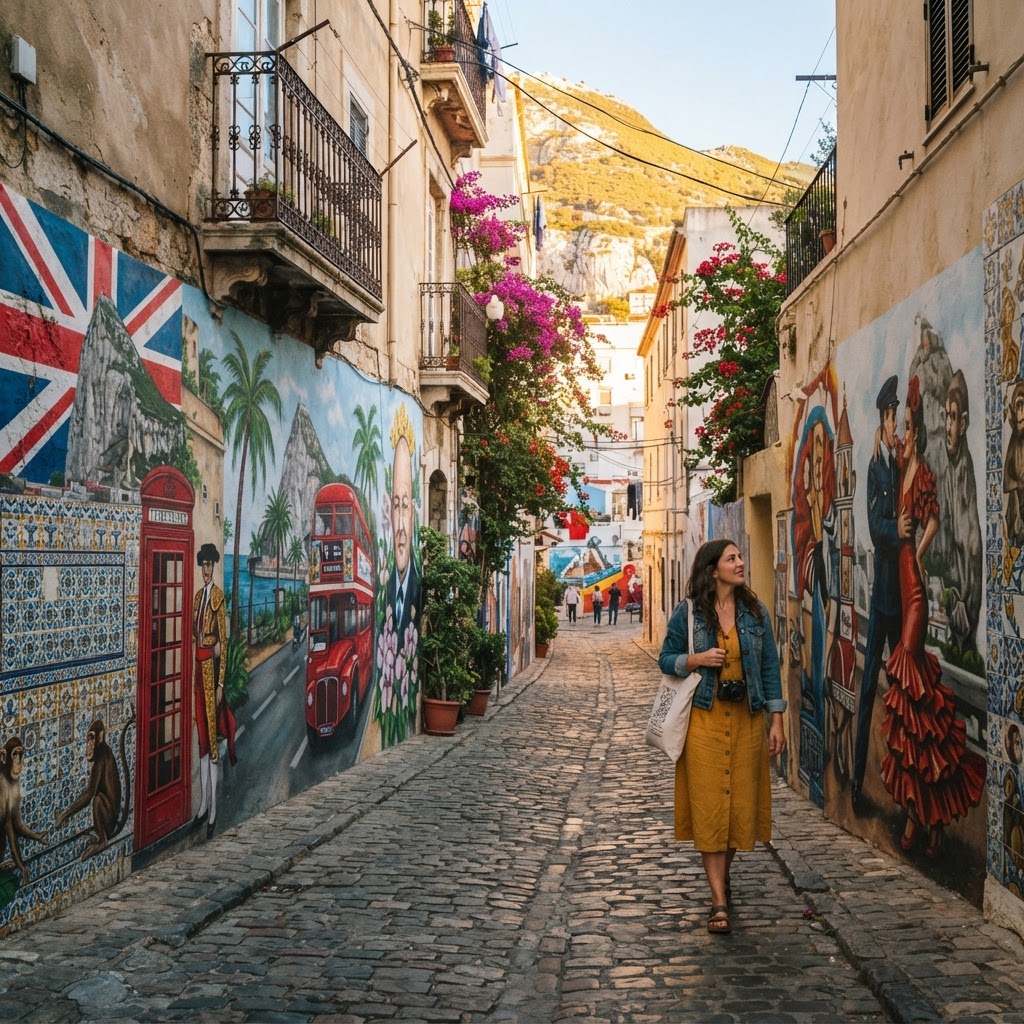
Llanito emerged from Gibraltar's uniquely cosmopolitan history. When Britain took Gibraltar from Spain in 1704 and the treaty was formalised in 1713 (Utrecht), the original Spanish population largely left. What followed was a remarkable demographic experiment: waves of immigrants from across the Mediterranean and beyond settled on the Rock over the following two centuries.
The major contributing communities were:
- Genoese Italians — the largest early immigrant group, who came as traders and workers. Many Gibraltarian surnames today are Genoese in origin: Poggio, Parody, Risso, Russo, Bossano, Traverso.
- Sephardic Jews — expelled from Spain in 1492, many Sephardic families settled in Gibraltar and brought their Judaeo-Spanish language, Haketia, which contributed words to Llanito.
- Andalusian Spanish — despite the official separation, Spanish workers from the surrounding region always crossed the border for work, and Andalusian Spanish became the grammatical backbone of Llanito.
- Maltese — Maltese workers arrived in significant numbers in the 19th century, particularly as labourers in the naval dockyards.
- British English — the language of government, education, and the military, which became increasingly dominant from the 19th century onward.
- Portuguese and Moroccan — smaller but present contributions from workers and traders from these neighbouring territories.
How Llanito Works: The Linguistics
Llanito's most distinctive feature is its code-switching — the seamless switching between English and Spanish within a single conversation, sentence, or utterance. Here's a simple example:
"I'm going to the tienda to buy some pan, ¿sabes?"
(I'm going to the shop to buy some bread, you know?)
The speaker has used English grammar ('I'm going to'), inserted Spanish nouns (tienda = shop, pan = bread), and ended with a Spanish discourse marker (¿sabes? = you know?). To a Llanito speaker, this is completely natural. To an outsider — even a fluent English or Spanish speaker — it can be initially confusing.
The language tends to use English for formal concepts (government, law, education, modern technology) and Spanish for everyday domestic life (food, family, emotions, local geography). This reflects the historical divide between the official British institutional world and the Andalusian domestic culture of Gibraltar's working class.
Key Llanito Words and Phrases
Here are some Llanito words and expressions commonly used in everyday Gibraltar speech:
- Llanito/Yanito — the language itself, and also the word Gibraltarians use to describe themselves ("I'm a Llanito")
- Borota — from Genoese, meaning a slightly silly or clumsy person. Used affectionately.
- Killo/Killa — a term of address, like 'mate' or 'buddy'. Used between friends constantly.
- Acholao/Acholá — from Spanish/Andalusian, meaning embarrassed or ashamed
- Chipichanga — a type of fried pastry, but also used colloquially
- Menda — me, myself (from Spanish slang)
- Pepe — a general term for any man, used the way 'bloke' is in British English
- ¿Qué pasa, killo? — the classic Llanito greeting: 'What's up, mate?'
- Está mu bueno — 'It's very good' (mixing Andalusian Spanish with a shortened 'muy')
Llanito in the Digital Age
Llanito faces the pressures that many minority vernaculars face in the 21st century: globalisation, the dominance of standard English in media and education, and the mixing of the local population with newcomers who do not speak the language. There is genuine concern among linguists and Gibraltarian cultural advocates that Llanito may decline over time.
Against this, Llanito has shown remarkable resilience. Gibraltar's local radio station (GBC) uses Llanito naturally in its broadcasts. Social media has created new spaces for Llanito expression — memes, WhatsApp conversations, and Instagram captions frequently mix English and Spanish in the Llanito way. Young Gibraltarians still code-switch as naturally as their grandparents did.
Several linguistic research projects have worked to document and preserve Llanito. The University of Gibraltar has conducted research into its vocabulary and grammatical structures. A Llanito dictionary has been compiled, and there are grassroots efforts to teach elements of the language in schools.
Llanito as Identity
Language is identity, and Llanito is central to what it means to be Gibraltarian. In a territory that is neither fully British nor fully Spanish — that has its own distinct history, culture, and sense of self — Llanito is the most tangible expression of that uniqueness. When Gibraltarians speak Llanito to each other, they are not just communicating; they are performing and asserting an identity that belongs to this tiny patch of limestone jutting into the sea.
The Brexit referendum of 2016 — in which Gibraltar voted 96% to Remain, the highest pro-Remain vote of any jurisdiction in the UK — illustrated how strongly Gibraltarians identify with their own particular path: British in sovereignty, Mediterranean in culture, European in aspiration. Llanito is the sound of that contradiction, made beautiful.
Learn More
Our dedicated Llanito Guide includes more phrases, audio context, and the cultural stories behind the language. For the broader history and culture of Gibraltar, explore the Insights & History section, and for a local feel, read our blog for local perspective pieces.
Enjoying this guide?
Get the best of Gibraltar in your inbox each week — tips, new spots, and events. No spam, unsubscribe anytime.
Quick answers
What Is Llanito?▼
Llanito (also spelled Yanito and pronounced 'ya-NEE-to') is the informal vernacular language of the Gibraltarian people. It is one of the most linguistically remarkable dialects in the world: a fluid, spontaneous blend of Andalusian Spanish and British English, layered with words and phrases from Genoese Italian, Haketia (Judaeo-Spanish), Maltese, Portuguese, and Arabic — the linguistic fingerprints of every community that has called Gibraltar home over the centuries.
How Llanito Works: The Linguistics▼
Llanito's most distinctive feature is its code-switching — the seamless switching between English and Spanish within a single conversation, sentence, or utterance. Here's a simple example:
Explore more on Gibraltar Unlocked
Daniel Toledo
FounderGibraltar-based writer and founder of Gibraltar Unlocked. Covering local food, travel, history and life on the Rock since 2023. Also builds web apps at instatales.ai.