☀️ Gibraltar heat warning — stay safe on the Rock
Summer temperatures regularly exceed 30°C with high humidity. Follow local advice, stay cool and hydrated, carry water (refill free at Casemates Square), avoid the Upper Rock between 12:00–16:00, and use sun protection (hat, sunglasses, SPF 30+). If you feel dizzy or stop sweating, seek shade and fluids immediately.
Full guide: How to cool down in Gibraltar →Key takeaways
- 1.TL;DR: The Barbary macaques of Gibraltar are Europe's only wild monkeys and the Rock's most famous residents.
- 2.Here is everything you need to know — where to find them, safety rules, their fascinating history, and why they matter more than you think.
- 3.Meet Gibraltar's Most Famous Residents If there is one thing every visitor to Gibraltar remembers, it is the monkeys.
TL;DR: The Barbary macaques of Gibraltar are Europe's only wild monkeys and the Rock's most famous residents. Here is everything you need to know — where to find them, safety rules, their fascinating history, and why they matter more than you think.
Meet Gibraltar's Most Famous Residents
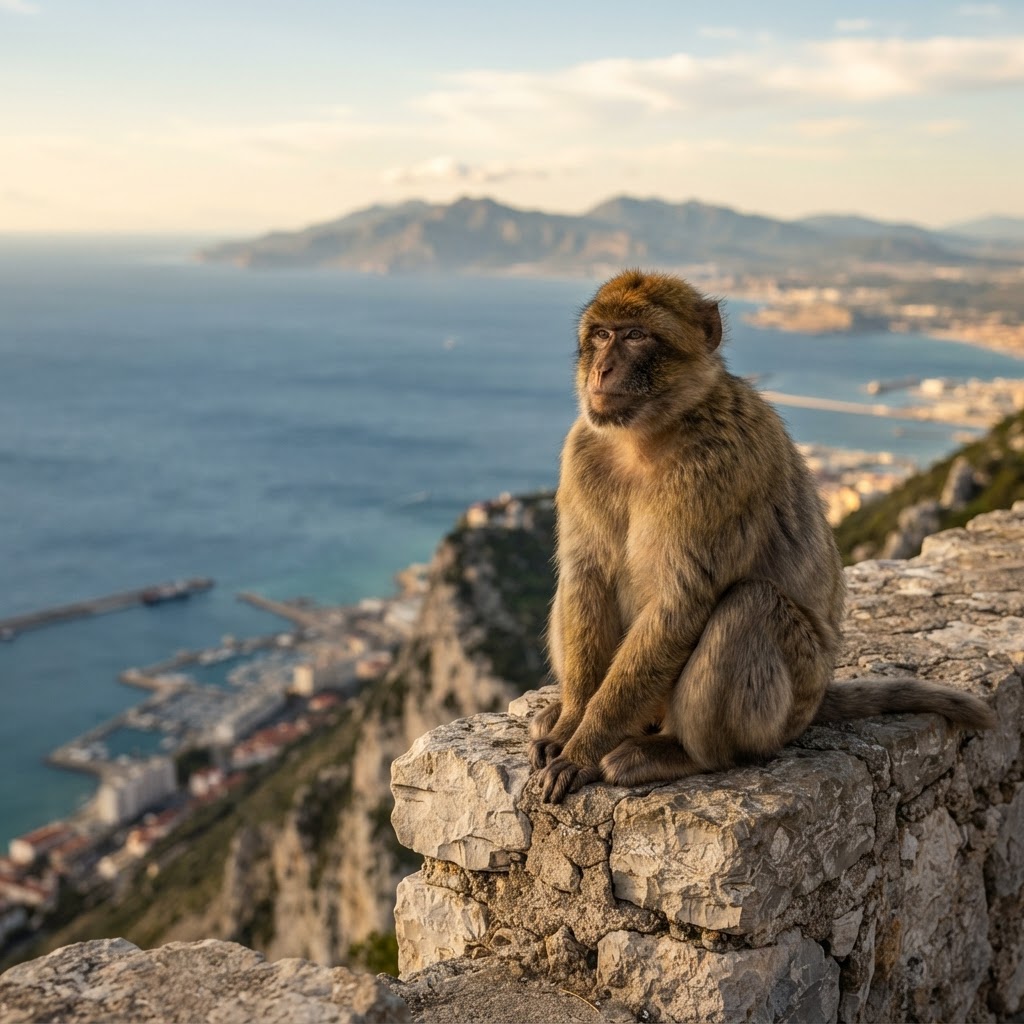
If there is one thing every visitor to Gibraltar remembers, it is the monkeys. The Barbary macaques (Macaca sylvanus) that live on the Upper Rock are the only wild monkeys in Europe — a unique population that has become synonymous with Gibraltar itself. Their image appears on postcards, souvenirs, and even the Gibraltar coat of arms. But there is far more to these remarkable animals than photo opportunities.
Where to Find the Macaques
The Barbary macaques live on the Upper Rock, primarily in two areas:
The Apes' Den
The Apes' Den is the main viewing area, accessible via the Gibraltar Cable Car or by walking up the Rock. Here, the macaques are habituated to human presence and can often be seen sitting on walls, grooming each other, and playing. This is the best spot for first-time visitors.
Along the Upper Rock Roads
The macaques roam freely across the entire Upper Rock Nature Reserve. You will often encounter them along Queen's Road, near St Michael's Cave, and around the Great Siege Tunnels. They are particularly active in the early morning and late afternoon.
Do Not Feed Them — It Is Illegal
Feeding the macaques is illegal under Gibraltar law, with fines up to £4,000. The law exists for good reason: feeding alters their natural foraging behaviour, makes them aggressive towards tourists, and can make them ill. Human food — especially processed snacks — is harmful to their health.
The History of Gibraltar's Macaques
The origin of Gibraltar's macaque population is shrouded in legend and debate. The most widely accepted theory is that the macaques were introduced by the Moors or British garrison, brought from North Africa (where the species is native to Morocco and Algeria) as pets or exotic curiosities.
The Legend
Local legend holds that Gibraltar will remain British as long as the macaques remain on the Rock. During WWII, the population dwindled to just a handful of individuals. Winston Churchill, aware of the legend, ordered reinforcements from North Africa to boost the numbers. The macaques have been carefully managed ever since.
Modern Population
Today, Gibraltar's macaque population numbers around 230-250 individuals, divided into several troops. They are managed by the Gibraltar Ornithological & Natural History Society (GONHS), which monitors their health, diet, and behaviour. Each macaque is microchipped and identifiable.
Barbary Macaque Behaviour
Social Structure
Barbary macaques live in matriarchal troops led by dominant females. A typical troop has 20-60 individuals with a strict social hierarchy. Males leave their birth troop at maturity and join new troops — an unusual pattern among primates that prevents inbreeding.
Communication
Barbary macaques have one of the most complex vocal repertoires of any macaque species. They use different calls for predators, food, and social interactions. They also communicate through facial expressions and body postures. If a macaque bares its teeth, it is not smiling — it is a sign of tension or aggression.
Diet
In the wild, Barbary macaques eat fruits, leaves, seeds, roots, and insects. On Gibraltar, their natural diet is supplemented by the vegetation of the Upper Rock. The management team provides supplemental feeding to prevent them from foraging in town — this is why you should never feed them.
Safety Rules: How to Behave Around the Macaques
The macaques are wild animals, not pets. Follow these rules to stay safe and protect the monkeys:
- Do not touch them: Macaques can bite and scratch. Touching is illegal and dangerous.
- Do not feed them: Feeding is illegal (fines up to £4,000) and harmful to their health.
- Keep your distance: Stay at least 2 metres away. If a macaque approaches, back away calmly.
- Secure your belongings: Macaques are notorious thieves. They will grab bags, phones, hats, and food. Keep everything zipped and close to your body.
- Do not make eye contact: Direct staring can be perceived as a threat.
- Do not show teeth: Baring teeth is an aggressive signal in macaque body language.
- Keep children close: Small children are at eye level with the macaques and may be perceived as threats or playmates.
- Do not surround or corner a macaque: Give them an escape route at all times.
Best Times to See the Macaques
- Early morning (8-10 AM): The macaques are most active after their morning feed. Fewer tourists mean better viewing.
- Late afternoon (4-6 PM): Second active period before they settle for the night.
- Avoid midday: In summer, the macaques retreat to shaded areas during the hottest part of the day.
How to Get to the Apes' Den
- Cable Car: Take the cable car to the top station, then walk 5 minutes to the Apes' Den. Cost: approximately £18 return.
- Walk up: Via Mediterranean Steps or Old Queen's Road (60-90 minutes, free). See our budget guide.
- Car/taxi: Drive up Queen's Road to the Apes' Den car park. Taxis from the town centre cost around £8-12.
- Tour: Many organised tours include the Apes' Den as a stop.
Photography Tips
The macaques are one of Gibraltar's best photography subjects. Tips for great shots:
- Use a zoom lens — do not get close for a photo
- Shoot in the morning for the best light and active animals
- Capture grooming behaviour — it is intimate and fascinating
- Photograph mothers with babies (spring/summer) — but keep your distance
- Never use flash — it distresses the animals
Why the Barbary Macaque Matters
The Barbary macaque is classified as Endangered on the IUCN Red List. The wild population in Morocco and Algeria has declined dramatically due to habitat loss, illegal pet trade, and human conflict. Gibraltar's population — while introduced — is one of the most important captive-managed populations in the world.
By visiting Gibraltar and seeing the macaques responsibly, you are supporting conservation efforts. The entry fees to the Upper Rock Nature Reserve fund the macaque management programme, habitat maintenance, and scientific research.
Frequently Asked Questions
Are the Gibraltar monkeys wild?
Yes. The Barbary macaques on Gibraltar are wild animals. They are managed (supplemental feeding, health monitoring) but they roam freely, breed naturally, and exhibit wild behaviour. They are not domesticated or tame.
Will the monkeys attack me?
They will not attack unprovoked, but they will defend themselves if threatened. Most incidents occur when tourists try to touch, feed, or corner them. Follow the safety rules and you will be fine.
What happens if I feed a monkey?
You can be fined up to £4,000. Feeding is illegal because it harms the macaques' health and alters their natural behaviour, making them aggressive towards tourists.
How many monkeys are on the Rock of Gibraltar?
Approximately 230-250 individuals, divided into several troops. The population is carefully managed by GONHS.
Where else can I see Barbary macaques?
In the wild, only in the Atlas and Rif Mountains of Morocco and Algeria. Gibraltar is the only place in Europe where you can see them.
Plan Your Macaque Visit
- Upper Rock guide — everything on top of the Rock
- Cable car guide — tickets, times and tips
- Things to do in Gibraltar — the complete guide
- 24-hour itinerary — includes the Apes' Den
- Photography spots — best photo locations on the Rock
Enjoying this guide?
Get the best of Gibraltar in your inbox each week — tips, new spots, and events. No spam, unsubscribe anytime.
Quick answers
Where to Find the Macaques▼
The Barbary macaques live on the Upper Rock, primarily in two areas:
Do Not Feed Them — It Is Illegal▼
Feeding the macaques is illegal under Gibraltar law, with fines up to £4,000. The law exists for good reason: feeding alters their natural foraging behaviour, makes them aggressive towards tourists, and can make them ill. Human food — especially processed snacks — is harmful to their health.
Why the Barbary Macaque Matters▼
The Barbary macaque is classified as Endangered on the IUCN Red List. The wild population in Morocco and Algeria has declined dramatically due to habitat loss, illegal pet trade, and human conflict. Gibraltar's population — while introduced — is one of the most important captive-managed populations in the world.
Are the Gibraltar monkeys wild?▼
Yes. The Barbary macaques on Gibraltar are wild animals. They are managed (supplemental feeding, health monitoring) but they roam freely, breed naturally, and exhibit wild behaviour. They are not domesticated or tame.
Will the monkeys attack me?▼
They will not attack unprovoked, but they will defend themselves if threatened. Most incidents occur when tourists try to touch, feed, or corner them. Follow the safety rules and you will be fine.
What happens if I feed a monkey?▼
You can be fined up to £4,000. Feeding is illegal because it harms the macaques' health and alters their natural behaviour, making them aggressive towards tourists.
How many monkeys are on the Rock of Gibraltar?▼
Approximately 230-250 individuals, divided into several troops. The population is carefully managed by GONHS.
Where else can I see Barbary macaques?▼
In the wild, only in the Atlas and Rif Mountains of Morocco and Algeria. Gibraltar is the only place in Europe where you can see them.
Explore more on Gibraltar Unlocked
Daniel Toledo
FounderGibraltar-based writer and founder of Gibraltar Unlocked. Covering local food, travel, history and life on the Rock since 2023. Also builds web apps at instatales.ai.


