☀️ Gibraltar heat warning — stay safe on the Rock
Summer temperatures regularly exceed 30°C with high humidity. Follow local advice, stay cool and hydrated, carry water (refill free at Casemates Square), avoid the Upper Rock between 12:00–16:00, and use sun protection (hat, sunglasses, SPF 30+). If you feel dizzy or stop sweating, seek shade and fluids immediately.
Full guide: How to cool down in Gibraltar →Key takeaways
- 1.Standing on the southern tip of Gibraltar, you can see Africa — just 14km across the Strait.
- 2.It's one of the few places in Europe where two continents stare at each other across a narrow strip of sea.
- 3.So it's no surprise that one of the most common questions we get is: can I take a ferry from Gibraltar to Morocco?
Standing on the southern tip of Gibraltar, you can see Africa — just 14km across the Strait. It's one of the few places in Europe where two continents stare at each other across a narrow strip of sea. So it's no surprise that one of the most common questions we get is: can I take a ferry from Gibraltar to Morocco?
The short answer is yes, but not directly from Gibraltar's own port. Here's the practical route, the paperwork, and a realistic day-trip plan.
Is there a direct ferry from Gibraltar to Morocco?
There is no regular, year-round ferry from Gibraltar's port to Morocco. Occasional seasonal or charter services have run in the past, but they're unreliable and shouldn't be the basis of your travel plans.
The practical route is to cross the land border into Spain (a 10-minute walk or short drive to La Línea) and sail from one of two Spanish ports: Tarifa or Algeciras.
The two ferry routes
Tarifa → Tangier Ville (the fast route)
Tarifa is about a 45-minute drive from the Gibraltar border. The crossing to Tangier Ville takes just 35–60 minutes, and you dock right in the city centre — perfect for a day trip. Operators include FRS and Balearia. Foot-passenger fares start around €25–€45 one way.
Algeciras → Tangier Med (the frequent route)
Algeciras is closer to the border (~25 minutes) and has more frequent sailings, including car ferries. The crossing takes 60–90 minutes, but you arrive at Tangier Med port, about 45 minutes from the city centre. Fares are similar, with car ferries costing €60–€120.
Our pick: take Tarifa if you're doing a day trip on foot — it's faster and docks in town. Take Algeciras if you're driving, travelling in peak season when Tarifa is full, or want more departure times.
Passport and visa: what you need
Morocco has its own entry rules, separate from both Gibraltar and the Schengen zone:
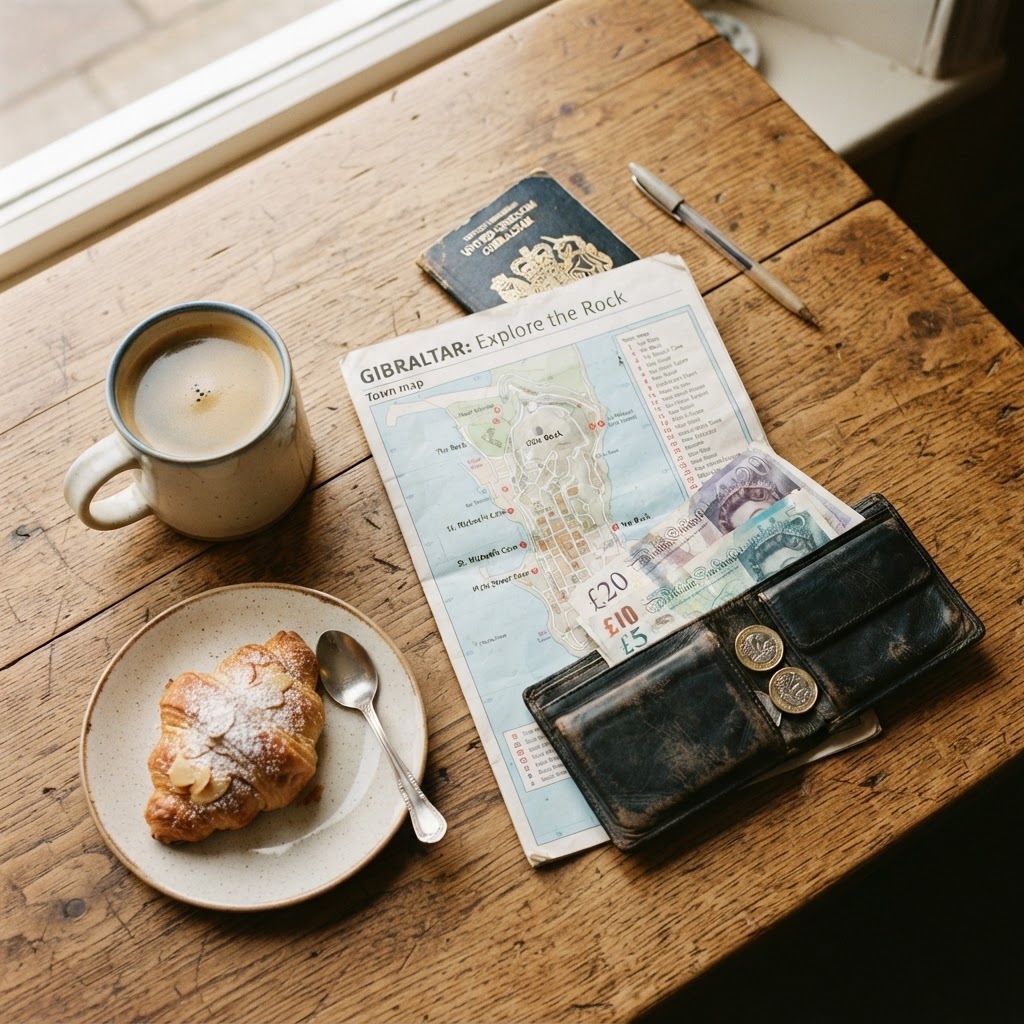
- Passport: valid for 6+ months with a blank page. EU/UK national ID cards are not accepted — you need a passport.
- Visa: UK, EU, US, Canada and Australia citizens enter visa-free for up to 90 days. Check Morocco's visa list for your nationality. A Gibraltar or Schengen visa does not cover Morocco.
- Driving: you'll need a green card (Morocco vehicle insurance) available at the port, plus your V5 and licence. Most Spanish rental cars don't allow cross-border travel to Morocco.
A realistic Tangier day trip
A day trip from Gibraltar to Tangier is doable but tight. Aim for the first ferry out and the last back:
- 07:30 — Cross the border to Spain and drive to Tarifa.
- 09:00 — Sail to Tangier Ville (~35–60 min). Have your passport ready for Moroccan immigration.
- 10:30 — Explore the Medina, Grand Socco and Petit Socco. Hire a local guide at the port for a few hours.
- 13:00 — Lunch on a rooftop terrace: tagine, couscous, fresh seafood and mint tea.
- 15:00 — Visit the Kasbah Museum, Cape Spartel and the Caves of Hercules if time allows.
- 17:30 — Head back to the port for the return sailing.
- 20:00 — Back in Tarifa, drive to Gibraltar before late evening.
If that sounds like a lot of logistics, several operators run organised day trips from the Costa del Sol and Tarifa that include ferry tickets, a guide and transport in Tangier — a less stressful option if you'd rather sit back.
Practical tips
- Book ferry tickets ahead in July and August — sailings sell out, especially on weekends.
- Carry euros for the Spanish side and dirhams (or euros, widely accepted) for Morocco.
- Keep your return ferry ticket and passport handy for both borders.
- Morocco is one hour behind Gibraltar in summer, two hours in winter — check the clock.
- Tangier is safe and tourist-friendly, but as with any busy port city, keep belongings close.
The bottom line
Crossing from Gibraltar to Morocco is one of the great short-haul adventures in Europe — two continents, two cultures, and a stretch of water steeped in history. With a little planning, you can stand on the Rock in the morning and sip mint tea in a Tangier medina by lunchtime.
Enjoying this guide?
Get the best of Gibraltar in your inbox each week — tips, new spots, and events. No spam, unsubscribe anytime.
Explore more on Gibraltar Unlocked
Daniel Toledo
FounderGibraltar-based writer and founder of Gibraltar Unlocked. Covering local food, travel, history and life on the Rock since 2023. Also builds web apps at instatales.ai.