☀️ Gibraltar heat warning — stay safe on the Rock
Summer temperatures regularly exceed 30°C with high humidity. Follow local advice, stay cool and hydrated, carry water (refill free at Casemates Square), avoid the Upper Rock between 12:00–16:00, and use sun protection (hat, sunglasses, SPF 30+). If you feel dizzy or stop sweating, seek shade and fluids immediately.
Full guide: How to cool down in Gibraltar →Key takeaways
- 1.Gibraltar's Famous Monkeys: The Complete Guide No visit to Gibraltar is complete without encountering the Barbary macaques — the famous 'monkeys of the Rock.
- 2.' They are one of the most iconic sights in all of southern Europe, and certainly the most photographed feature of Gibraltar's Upper Rock Nature Reserve.
- 3.Technically, Barbary macaques are not monkeys — they are apes .
Gibraltar's Famous Monkeys: The Complete Guide
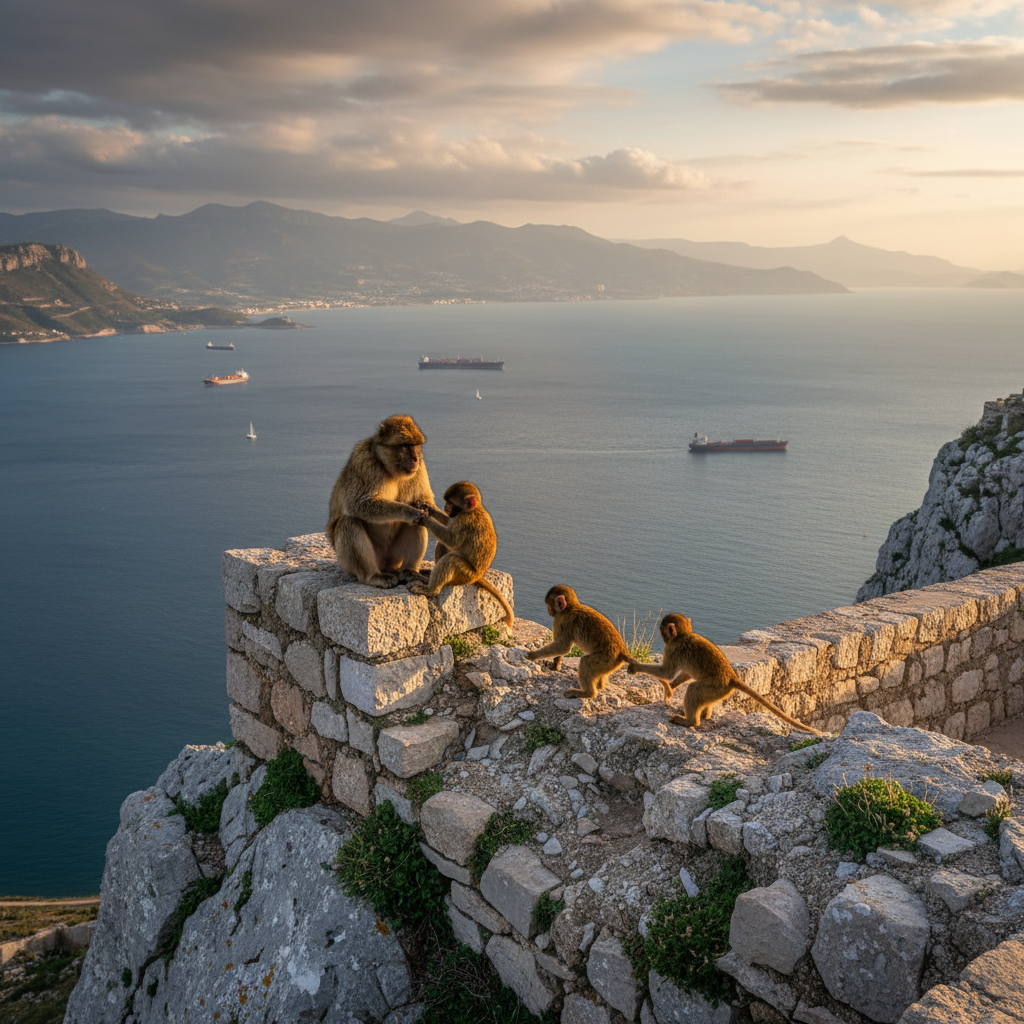
No visit to Gibraltar is complete without encountering the Barbary macaques — the famous 'monkeys of the Rock.' They are one of the most iconic sights in all of southern Europe, and certainly the most photographed feature of Gibraltar's Upper Rock Nature Reserve.
But there's a lot more to them than meets the eye. Here's everything you need to know before you visit.
Are They Actually Monkeys?
Technically, Barbary macaques are not monkeys — they are apes. Like gorillas and chimpanzees, they lack tails. Their scientific name is Macaca sylvanus. Despite this, the colonial-era nickname 'monkeys' has stuck, and locals happily use it.
They are the only wild primate population in Europe outside of humans — which makes Gibraltar genuinely unique on the continent.
How Many Are There?
Gibraltar's macaque population currently stands at around 300 individuals, organised into several troops that occupy different areas of the Upper Rock Nature Reserve. Each troop has its own territory and social hierarchy.
The Legend of the Gibraltar Monkeys
There's a famous legend — still repeated today — that says if the macaques ever leave Gibraltar, British rule over the territory will end. Whether this was invented by Churchill or predates him is debated, but Winston Churchill did famously order the macaque population to be replenished with Moroccan animals in 1942 when numbers dropped dangerously low during World War II.
Today the macaques are protected by law and their population is actively managed by the Gibraltar Ornithological & Natural History Society.
Where Do the Macaques Live?
The macaques live throughout the Upper Rock Nature Reserve, but you are most likely to encounter them at:
- The cable car summit station — troops regularly visit the tourist area for food scraps
- Queen's Gate area — on the road that winds up from the town to the Rock
- Apes' Den — a designated area on the way to the summit where one troop is almost always present
- Throughout the nature reserve paths — they roam freely and encounters anywhere on the Rock are common
How to Get Up to See the Macaques
🚡 Cable Car (Recommended)
The Gibraltar Cable Car departs from the town centre and takes you to the summit station in around 6 minutes. It offers spectacular views of the Strait on the way up and the macaques often gather near the upper station. Book tickets online in advance during summer — queues can be long.
🚕 Taxi Tour
Official Gibraltar taxi tours take in all the Upper Rock sights including the macaque areas. A fixed-price tour typically covers the cable car, St Michael's Cave, the Siege Tunnels, and macaque viewing. Good value if you want a guided experience.
🚶 On Foot
You can walk up the Rock from the town — it's steep and takes 30–45 minutes. The macaques are encountered along many of the paths. Walking down is recommended even if you take the cable car up.
How to Behave Around the Macaques
The macaques are wild animals. They can and do bite, scratch, and grab — particularly if they think you have food. Follow these rules:
- 🚫 Do not feed the macaques — it is illegal and carries an on-the-spot fine. Feeding makes them aggressive and dependent on humans.
- 🚫 Do not show food near them — even eating a snack near macaques can provoke a grab
- ✅ Keep bags zipped and out of reach — they are expert thieves and will open bags, steal sunglasses, and take phones
- ✅ Keep your distance — they look cute but they are strong and can be unpredictable
- ✅ Don't make direct eye contact for prolonged periods — in macaque language, it's a challenge
- ✅ Enjoy from a respectful distance — they go about their social lives regardless of tourists and it's fascinating to watch
Best Time to See the Macaques
The macaques are active all year round. The best viewing conditions are:
- Morning (before 11am) — troops are most active and visible; fewer tourists
- Spring (March–May) — breeding season brings babies, which are utterly adorable and endlessly entertaining to watch
- Autumn — cooler weather, thinner crowds, macaques are very active
- They originated in North Africa (Morocco and Algeria) — the same species still lives in the Atlas Mountains
- They are expert social groomers — watching a troop groom each other is one of the great wildlife spectacles on the Rock
- Each troop has a dominant male, but macaque society is actually matriarchal — females determine troop hierarchy
- They live to around 20–25 years in the wild
- Baby macaques are born dark brown and gradually lighten to the adult sandy/brown-grey colouring
Fun Facts About Gibraltar's Macaques
Visit the Things to Do page for cable car tickets and Upper Rock touring options, and check our Blog for more Gibraltar wildlife and nature content.
Enjoying this guide?
Get the best of Gibraltar in your inbox each week — tips, new spots, and events. No spam, unsubscribe anytime.
Quick answers
Are They Actually Monkeys?▼
Technically, Barbary macaques are not monkeys — they are apes. Like gorillas and chimpanzees, they lack tails. Their scientific name is Macaca sylvanus. Despite this, the colonial-era nickname 'monkeys' has stuck, and locals happily use it.
How Many Are There?▼
Gibraltar's macaque population currently stands at around 300 individuals, organised into several troops that occupy different areas of the Upper Rock Nature Reserve. Each troop has its own territory and social hierarchy.
Where Do the Macaques Live?▼
The macaques live throughout the Upper Rock Nature Reserve, but you are most likely to encounter them at:
How to Get Up to See the Macaques🚡 Cable Car (Recommended)▼
The Gibraltar Cable Car departs from the town centre and takes you to the summit station in around 6 minutes. It offers spectacular views of the Strait on the way up and the macaques often gather near the upper station. Book tickets online in advance during summer — queues can be long.
How to Behave Around the Macaques▼
The macaques are wild animals. They can and do bite, scratch, and grab — particularly if they think you have food. Follow these rules:
Explore more on Gibraltar Unlocked
Daniel Toledo
FounderGibraltar-based writer and founder of Gibraltar Unlocked. Covering local food, travel, history and life on the Rock since 2023. Also builds web apps at instatales.ai.