☀️ Gibraltar heat warning — stay safe on the Rock
Summer temperatures regularly exceed 30°C with high humidity. Follow local advice, stay cool and hydrated, carry water (refill free at Casemates Square), avoid the Upper Rock between 12:00–16:00, and use sun protection (hat, sunglasses, SPF 30+). If you feel dizzy or stop sweating, seek shade and fluids immediately.
Full guide: How to cool down in Gibraltar →Key takeaways
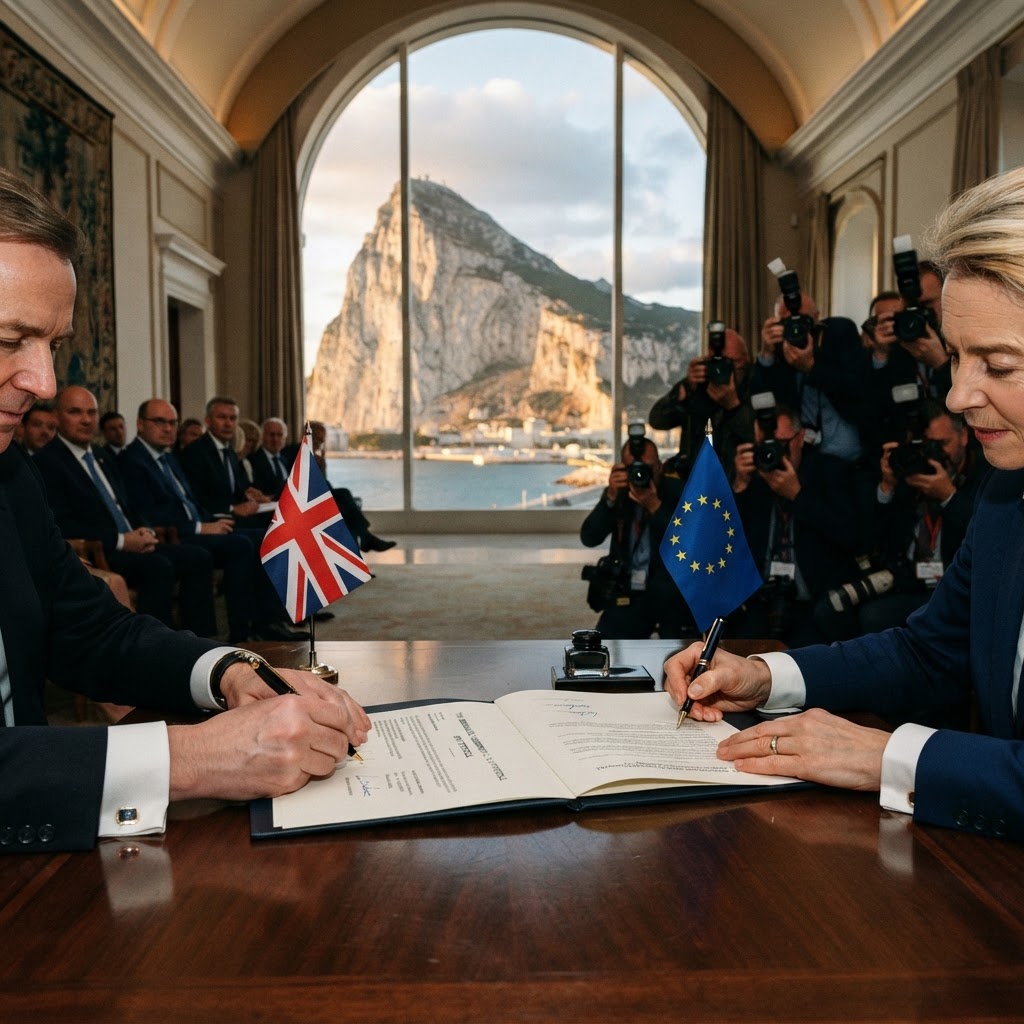
- 1.TL;DR: On 14 July 2026, Britain and the European Union formally signed a historic treaty on Gibraltar's status in Brussels.
- 2.From 15 July 2026, the 118-year-old border controls between Gibraltar and Spain are removed, aligning Gibraltar with the EU customs union and Schengen free-travel zone.
- 3.The fence at La Verja comes down, controls move to Gibraltar's airport and seaport, and British sovereignty over the Rock is unchanged.
TL;DR: On 14 July 2026, Britain and the European Union formally signed a historic treaty on Gibraltar's status in Brussels. From 15 July 2026, the 118-year-old border controls between Gibraltar and Spain are removed, aligning Gibraltar with the EU customs union and Schengen free-travel zone. The fence at La Verja comes down, controls move to Gibraltar's airport and seaport, and British sovereignty over the Rock is unchanged.
A Signature Years in the Making
The treaty was signed in Brussels by EU Trade Commissioner Maroš Šefčovič, UK Minister of State for Europe Stephen Doughty, Spanish Foreign Minister José Manuel Albares and Gibraltar's Chief Minister Fabian Picardo. It brings to an end nearly a decade of uncertainty that began with the UK's 2016 vote to leave the EU — a vote Gibraltarians rejected by a remarkable 96%.
Gibraltar was left out of the UK-EU Trade and Cooperation Agreement, raising the spectre of a devastating "hard border" for the roughly 15,000 people — over half of Gibraltar's workforce — who cross the land frontier every day. The new treaty finally puts that fear to rest.
What Actually Changes on 15 July 2026
- The fence comes down. The physical border at La Verja, in place since 1908, is dismantled. Machinery has been tearing down sections of the fence each night in the run-up to the 15 July deadline.
- Free movement of people and goods. Gibraltar aligns with the EU customs union and the Schengen free-travel zone, creating what Chief Minister Picardo calls "complete and utter fluidity of people and goods".
- Gibraltar residents can cross into Spain using residence cards — no passport stamps required. Spanish citizens cross using a government ID card.
- Controls move to the airport and seaport. Travellers arriving from outside Schengen, such as the UK, show passports to both Gibraltarian and Spanish officials at Gibraltar's airport and port — modelled on the French police operation at London's St Pancras for Eurostar.
- Sovereignty is unchanged. Gibraltar remains British. The UK government stresses the treaty "safeguards British sovereignty and protects the autonomous operation of UK military facilities".
Why It Matters for Gibraltar
Chief Minister Fabian Picardo, speaking from the Gibraltar government's headquarters with the 1,400-foot Rock shrouded in cloud behind him, described the agreement as "a new dawn" for Gibraltar's relationship with Spain and the EU. The most obvious economic benefit, he says, is increased footfall — businesses will no longer be constrained by queues at the frontier.
Spain's foreign minister, José Manuel Albares, echoed the sentiment, calling it "a new era" that will benefit 300,000 residents of the Campo de Gibraltar region by improving connectivity, encouraging investment and strengthening cross-border cooperation — "replacing centuries of mistrust with a shared future".
What It Means Across the Border in La Línea
The deal is significant beyond Gibraltar itself. La Línea de la Concepción, the Spanish town on the other side of the fence, has unemployment close to 30% in an already struggling Andalusian economy. Juan Franco, the town's mayor, notes that a third of an average company's income there comes from clients in Gibraltar.
"This is something historic, we've had a border fence since 1908," Franco said. "This solution to Brexit will end up having a positive effect for us."
For the thousands of Spaniards who commute into Gibraltar each day — like Shilpi Chotrani, who rides her bicycle across every morning to a job in human resources — the removal of the border is personal. "The fact that there is a border between us is ridiculous," she said. "This should have been done a long time ago."
What Changes for Businesses
The treaty is not without adjustments. Goods sold in Gibraltar must now comply with EU regulations, a shift from the previous regime. A new transaction tax replaces import duty — charged on all goods sold in Gibraltar, starting at 15% in 2026 and rising gradually to 17%, with higher excise rates on certain products.
John Isola, managing director of Anglo Hispano Company, which runs several restaurants and bars on the Rock, calls the arrangement "a good compromise" that will encourage more visitors. He admits to some nervousness about new paperwork and EU standards for importers, but sees relief that the long Brexit saga is finally resolved — without a hard border.
From Blockade to Open Frontier
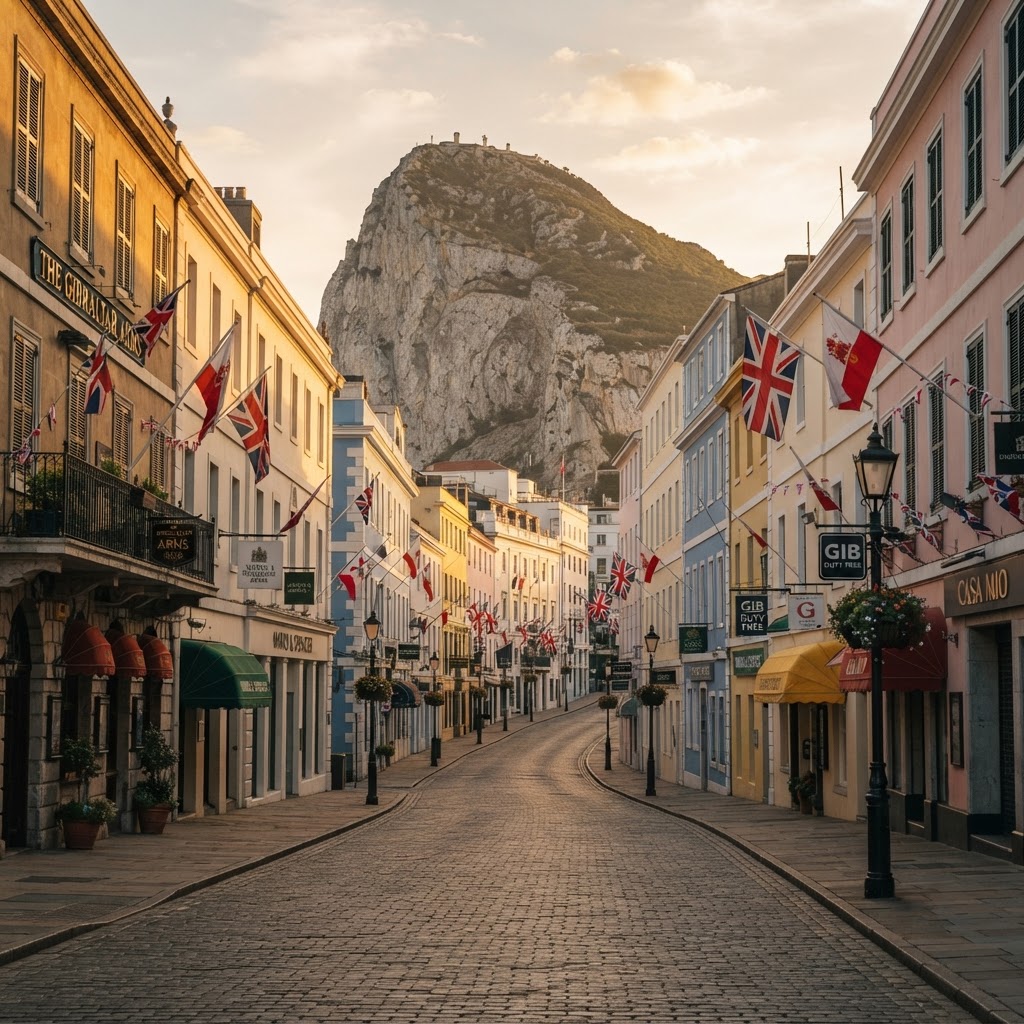
The removal of the border is the latest twist in a turbulent history. Spain's dictator Francisco Franco imposed a blockade of the Rock in 1969 that lasted until 1982, well after his death. Britain won Gibraltar in the 1713 Treaty of Utrecht, ending the War of Spanish Succession. Now, more than three centuries on, the fence that has defined the frontier since 1908 is coming down.
As the UK government put it: "Our support for Gibraltar remains as solid as the Rock."
Planning Your Visit
For the latest practical guidance on crossing into Gibraltar — documents, customs, and what the new rules mean for tourists — see our complete Gibraltar Border Crossing Guide. You can also browse our Gibraltar FAQ for quick answers, or explore things to do and where to eat on the Rock.
Frequently Asked Questions
When does the Gibraltar border open?
The treaty is provisionally applied from 15 July 2026, meaning the practical benefits — removal of land border checks — take effect immediately. Full ratification by the UK and European Parliaments is still pending.
Do I still need a passport to visit Gibraltar?
If you cross by land from Spain, no checks take place at the fence from 15 July 2026. If you arrive by air or sea, you show your passport to both Gibraltar and Spanish officials at the airport or port. A valid passport or EU national ID card remains required for entry.
Is Gibraltar still British?
Yes. The treaty safeguards British sovereignty over Gibraltar and protects UK military facilities. Sovereignty is unchanged.
Will prices change in Gibraltar?
A new transaction tax replaces import duty, starting at 15% and rising gradually. Some price advantages on goods may narrow over time, but Gibraltar remains outside the EU VAT area.
Enjoying this guide?
Get the best of Gibraltar in your inbox each week — tips, new spots, and events. No spam, unsubscribe anytime.
Quick answers
Why It Matters for Gibraltar▼
Chief Minister Fabian Picardo, speaking from the Gibraltar government's headquarters with the 1,400-foot Rock shrouded in cloud behind him, described the agreement as "a new dawn" for Gibraltar's relationship with Spain and the EU. The most obvious economic benefit, he says, is increased footfall — businesses will no longer be constrained by queues at the frontier.
What It Means Across the Border in La Línea▼
The deal is significant beyond Gibraltar itself. La Línea de la Concepción, the Spanish town on the other side of the fence, has unemployment close to 30% in an already struggling Andalusian economy. Juan Franco, the town's mayor, notes that a third of an average company's income there comes from clients in Gibraltar.
What Changes for Businesses▼
The treaty is not without adjustments. Goods sold in Gibraltar must now comply with EU regulations, a shift from the previous regime. A new transaction tax replaces import duty — charged on all goods sold in Gibraltar, starting at 15% in 2026 and rising gradually to 17%, with higher excise rates on certain products.
When does the Gibraltar border open?▼
The treaty is provisionally applied from 15 July 2026, meaning the practical benefits — removal of land border checks — take effect immediately. Full ratification by the UK and European Parliaments is still pending.
Do I still need a passport to visit Gibraltar?▼
If you cross by land from Spain, no checks take place at the fence from 15 July 2026. If you arrive by air or sea, you show your passport to both Gibraltar and Spanish officials at the airport or port. A valid passport or EU national ID card remains required for entry.
Is Gibraltar still British?▼
Yes. The treaty safeguards British sovereignty over Gibraltar and protects UK military facilities. Sovereignty is unchanged.
Will prices change in Gibraltar?▼
A new transaction tax replaces import duty, starting at 15% and rising gradually. Some price advantages on goods may narrow over time, but Gibraltar remains outside the EU VAT area.
Explore more on Gibraltar Unlocked
Daniel Toledo
FounderGibraltar-based writer and founder of Gibraltar Unlocked. Covering local food, travel, history and life on the Rock since 2023. Also builds web apps at instatales.ai.